
Subaru Outback (BR): Vehicle placard
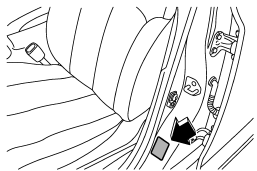
The vehicle placard is affixed to the driver’s side B-pillar.
Example:
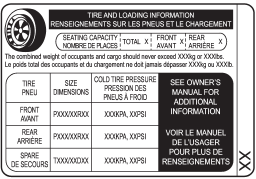
The vehicle placard shows original tire size, recommended cold tire inflation pressure on each tire at maximum loaded vehicle weight, seating capacity and loading information.
READ NEXT:
 Measuring and adjusting air pressure to achieve proper inflation
Check and, if necessary, adjust the pressure of each tire (including the spare)
at least once a month and before any long journey. Check the tire pressures when
the tires are cold. Use a pressure
Glossary of tire terminology
● Accessory weight
The combined weight (in excess of those standard items which may be replaced)
of automatic transmission, power steering, power brakes, power windows, power seats,
radio,
SEE MORE:
Rear gate (Outback) – if the rear gate cannot be unlocked
In the event that you cannot unlock the rear gate by operating the power door
locking switches or the remote keyless entry system, you can unlock it from inside
the cargo area.
1. Remove the access cover at the bottom-center of the rear gate trim using flat-head
screwdriver.
2. Locate the
Rear Brake Pad
A: REMOVAL
1) Lift up the vehicle, and then remove the rear wheels.
2) Remove the rear brake pad.
Remove the bolts and remove the brake hose bracket.
Remove the caliper bolt, and raise and hold the caliper body.
NOTE:
Do not disconnect the brake hose from the caliper body.
Remove the brake p
© 2010-2026 Copyright www.suoutback.com
